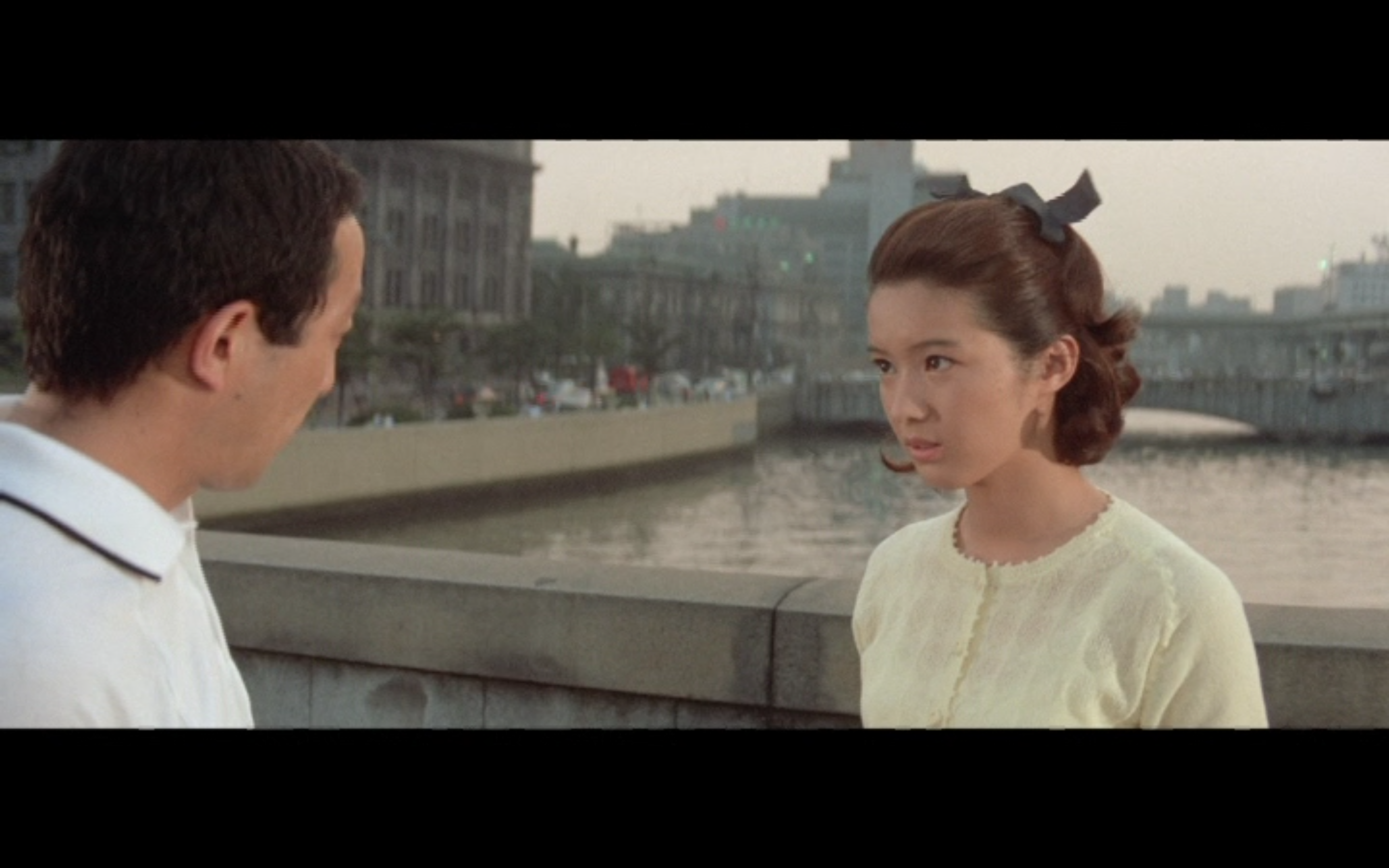
Showing posts with label jun fukuda. Show all posts

Wednesday, April 29, 2026

Hyappatsu Hyakuchu Gaiden: Literally Just The Entire* Previously Unavailable International Export Version


*Technically not the entire dub, since about 10 minutes are missing due to censorship, but as of a few days ago the number of available minutes of this dub was zero, so.

I had basically finished up my research into Ironfinger and its international export versions when I found something interesting: An eBay listing for an Indian VCD claiming to have an English-dubbed version of the film. I knew the original Frontier Enterprises dub was currently considered lost/unavailable, so this caught my eye, but I thought "Nah, why would it be on an Indian VCD? It's probably just an original dub done in-house by the distributor, I’m not gonna spend money on that."

And then I thought "...unless?"

So, anyway, here, available online for the very first time (as far as I'm aware) is the international export version of Ironfinger.

I’m keeping the seller's name off of this because I don't know if he wants to be associated with, ahem, unofficial merchandise. But "DJ", you know who you are.

People who know more about these things than I do have pointed out that it is clearly identifiable as Frontier Enterprises' work by the cast of VAs. Akira Takarada is voiced by Burr Middleton and Susumu Kurobe is voiced by William Ross. I'll add more names as I fill out the full roster (which I hopefully will do). You'll be able to see right away the the dub is in very poor condition and about ten minutes are missing due to censorship, but some people are working right now on a reconstruction using the Japanese print, so it's likely a proper version in decent quality will be available soon.

Edit: The surgery was a success! The reconstruction is complete! Watch the dub in much, much better quality here.

We're actually very lucky that this is from India, because Indian films are required to show their censor certificate (or at least all the ones I've seen have been), and we can glean a great deal from this certificate. Using Google Lens to translate, I was able to find out that the certificate itself was issued in August 1977 with an expiration date of August 1987. This means that the Frontier dub has been kicking around India for close to fifty years while the rest of the world knew nothing. That's... kind of astounding to me, honestly. It's also intriguing that we can see there is English writing in the upper left-hand corner that says "recertification". Was this movie being shown in India even earlier?

We can also see by the big "A" for Adult that this was given India's equivalent of basically a PG-13 or a soft R: it's for adult audiences only, but you still can't show nudity.


Now, lastly, I know what you're all wondering: Does Yumi still call Komori "Mr. Only-Interested-In-Men" in the English dub? The answer is no, she does not; she calls him "Mr. Handsome of Aonuma".


Tuesday, April 28, 2026

100th Post Special: 100発 100中 / Hyappatsu hyakuchu / 100 Shot, 100 Killed (aka Ironfinger) [1965]

One hundred posts! I don't know whether to be proud or embarrassed.

In any case, to celebrate my hundredth post (and Akira Takarada's birthday), let's take a good, long look at 100 Shot, 100 Killed, or Ironfinger, as it's better known to audiences outside of Japan. Before we get started, though, if you haven't heard the full version of Akira Fuse's theme from the movie, do yourself a favor and listen to it on YouTube here; it is leaps and bounds better than the version used in the movie.

Thus soundtracked, let's begin by looking at some of the films that influenced Ironfinger. This post will, to no one's surprise, run very, very long, but I aim to make it worth your while.


Influences, part I: The Name's ボンド... ジェームズ ボンド


The first Japanese translation of a James Bond novel came in 1957, when Hayakawa Shobo published Live and Let Die as part of their "Hayakawa Pocket Mystery" series. The novels were published out-of-order; Casino Royale, chronologically the first Bond novel, wasn't published in Japanese until 1963. Japan first saw Bond on screen that same year, in Dr. No, retitled "007 is the Number of Killing" and released as a road show. Surprisingly, according to Wikipedia, ticket sales were very poor; the film grossed only 57.8 million yen, which didn't even place it within the top ten foreign films distributed in the country that year.

For whatever reason, audiences decided to give it another shot when From Russia With Love came to town the next year, and that film grossed 260.8 million yen - a drastic improvement that would become a pattern. Goldfinger1- the third entry in the James Bond series - premiered in Toho-owned theaters on April 1st, 1965 and grossed 706.32 million yen, making it the highest-grossing film of that year period, even including domestically-produced films.

Thus far, every Bond movie released in Japan had multiplied its gross returns by almost four times the previous one, and Toho managed to capitalize perfectly on that success by releasing Ironfinger at almost the same time as the fourth Bond movie, Thunderball, which again brought in a mind-boggling profit. Raking in over one billion yen, Thunderball was Japan's top-grossing film of 1966 (its December 1965 release made it count for the next year). 

Two years after Ironfinger, Bond himself would come to Japan on-screen in You Only Live Twice, the production of which was assisted by Toho, who provided soundstages, personnel, and Mie Hama and Akiko Wakabayashi as Bond girls. I could say many things about the film and its source novel's depiction of Japan, Japanese culture, and Japanese people, but its Japanese Wikipedia page does a better job than I ever could by succinctly describing several aspects of it as "absurd" and "unrealistic".

However, while Ironfinger does clearly tie itself to the Bond series through its title and the timing of its theatrical release, the film that arguably inspired much more of its overall style and tone is a relatively lesser-known French-Italian co-production called That Man From Rio.

Influences, part II: The Name's Belmondo... Jean-Paul Belmondo


One has only to watch Goldfinger and That Man From Rio back-to-back (as I did during research for this post) to see that Rio clearly had a much larger influence on Ironfinger in almost every respect. Jean-Paul Belmondo's performance as Rio's protagonist, unassuming train concierge/aviator/international man of mystery Pvt. Adrien Dufourquet, is very physical, taking advantage of his height to portray a character who almost comes off goofy and awkward at times but is, despite outward appearances, capable of holding his own in almost any situation. These are all things that are also true of Akira Takarada's performance as Andy Hoshino, and I'll eat my hat if Takarada wasn't studying Belmondo in preparation for his role in Ironfinger.

And it's not just Belmondo's acting that Ironfinger obviously takes a cue from: the fast-paced, zany yet self-aware tone of Rio feels like a blueprint for Ironfinger's similarly frenetic tempo. There is even a scene in the back quarter of Rio where Dufourquet steals a small passenger plane that, as far as I'm concerned, Ironfinger was paying direct homage to with its own prop plane chase scene.

Phillipe de Broca's That Man From Rio premiered in Japan in October of 1964, and both it and Belmondo were enormously popular in Japan at the time (JP Wikipedia states that he was equally as popular in the country as Alain Delon but had more male fans). Belmondo influenced a number of Japanese productions where characters were modeled after him - again, there's no way Takarada wasn't looking to him for inspiration. Most notably, Belmondo was a direct inspiration for the manga Lupin III, and in fact when Belmondo's films began airing on television2, Yasuo Yamada - by far best known as the voice of Lupin - became his exclusive Japanese dubber.

The line between all of these influences (though Ironfinger takes more from some than from others) is a closed circle, considering That Man From Rio was itself intended to be a bit of a Bond send-up. To get a more comprehensive picture of everything that went into Ironfinger, we'd have to conduct a full examination of the history and breadth of the spy genre within Japanese cinema - Bond did not invent the spy/crime movie, and neither of the two films we've just looked at were the first time Japan became acquainted with the genre - but such an examination is unfortunately outside the scope of this article.

So, for now, we'll leave it at that and move on to discussing the film itself.

Discussing The Film Itself


Ironfinger was released to laserdisc in 1997 (image credit to sinekon on Ameblo). Fun fact: That is a real rifle and it was gifted to screenwriter Kihachi Okamoto by Toshirō Mifune.

Although Ironfinger bears clear influences from other, contemporary films, in order to properly appreciate it on its own, I want us to set those associations aside, at least a little. Focusing too much on them runs the risk of distracting from the fact that the crew Toho assembled to work on this movie were some incredibly talented people, whose particular creative tendencies were perfectly suited to produce a zippy, eye-catching crime movie - Bond and Belmondo influences or not.

The film was directed by Jun Fukuda, whose style is all over it, but I would argue that Ironfinger's overall vibe owes as much if not more to the combination of Fukuda and Kihachi Okamoto as screenwriter than simply Fukuda alone. Okamoto's movies have an instantly recognizable look and feel to them no matter what genre he's working within, and although he only co-wrote the screenplay, I think something of his distinctive style shows through in the actual aesthetic of the film itself.

Okamoto's co-writer on the screenplay was mystery and sci-fi writer Michio Tsuzuki, who deserves mention as well. After the war, Tsuzuki worked on editing translations of French mystery novels and then began translating English mystery novels on his own, despite his inexperience (at the time) with the language. Tsuzuki's involvement with Ironfinger is extremely apropos, considering that he was working for Hayakawa when the company was producing the first Japanese James Bond translations - although I'm not certain if he was involved with Bond in any way before being brought on to co-write Ironfinger.

Looks can be deceiving: Ironfinger is so well-outfitted (despite a few reused sets) that it's very easy to believe actual overseas location shooting was used; in reality, the entire film was shot within Japan.

The film's cinematography and overall aesthetic are top-notch. Ironfinger's art director, Kazuo Ogawa, worked on many projects that reflect the typical style of 1960s Japanese cinema; he contributed to a lot of Crazy Cats films and Hitoshi Ueki's Japan's No. 1 ___ Man series, as well as two of Toho's Seishun TV dramas (among many other things). Cinematographer Shinsaku Uno is a much more obscure character, with only a few credits to his name and none of them particularly well-known, but he does a remarkably good job with Ironfinger despite being kind of a nobody. One thing I particularly appreciate is that the two rival crime families are color-coordinated to match their names, with the head of the Aonuma gang wearing blue (ao) and the head of the Akatsuki gang wearing red (aka). Komori, the Aonuma hitman who we'll meet shortly, even wears a blue tie and has some blue trim on the breast pocket of his suit. 

Ironfinger's boppy 1960s soundtrack was created by Masaru Sato, who really needs no introduction since you've most likely heard his work if you've seen more than one or two Japanese movies. As mentioned above, Akira Fuse sings the theme song, which was written by Tokiko Iwatani. Iwatani may not be a household name to Western audiences, but she's enormously important within the history of Showa-era pop music and composed lyrics for the likes of Yūzō Kayama, Hiromi Go, and The Peanuts. Within Japan she was also enormously prolific within the field of translating stage performances into Japanese. (Jesus Christ Superstar!)

From Toho's official DVD release. Splash text reads (in part) "Is this the Japanese 007!?"

In terms of acting, the star of the show is obviously Akira Takarada, although the movie would not be what it is without an excellent ensemble cast backing him up. Takarada's physicality is what sells the role, I think - he rarely spends a moment sitting still, even when he's tied up by some villain or another. Takarada himself has looked back on this role fondly in interviews, and it's considered by fans to be one of his best; his oft-mistranslated "Mr. 100 Shots" line in Godzilla Final Wars is, in the original Japanese, a reference to this role, inserted at the behest of director Ryūhei Kitamura.

Many reviews of Ironfinger that I've read tend to agree that Akihiko Hirata's character is really underused. Hirata plays Komori3, a hitman for the Aonuma family, one of two rival gangs both vying for the same shipment of firearms. Komori almost acts as a foil for Hoshino, or at least he would have if his character had been a little more developed. Hoshino's also a hitman, as we learn at the end of the film, but Hoshino is nothing but an impenetrable shield of bravado under which his true identity lies, whereas with Komori, what you see is what you get. And what you see is a really ruthless killer who carries a pocket flask full of acid.


This off-white pinstriped suit Komori wears for the first half of Ironfinger is one of my favorite suits Hirata's worn on film. It also ties into the color-coding of the two rival gangs, because after Aonuma dies (and it starts to become clear Komori wasn't only working for Aonuma), we see Komori in a plain grey suit without the blue accents.

The last thing I'd like to note before we move on is that while Takarada seems to have learned his French lines phonetically4, Hirata actually learned French in military school and had planned to become a military attaché to the French embassy if there hadn't been a war. That was about 20 years before Ironfinger, so I have no idea how much he retained, but he certainly had familiarity with the language at the very least. He has fewer French lines than Takarada, but to me (someone who knows absolutely no French) I think he does sound a little more natural in his delivery.

With that on our minds, let's take a look at Ironfinger on the international stage.


A Parisian in America (and Romania, Italy, Brazil, etc): Ironfinger Goes Global


"Squirm as a girl takes over!"...?

Ironfinger's entrance into the United States market is somewhat murky. Its first mention in English-language print material dates back to volume 9 number 2 of UniJapan Film Quarterly, published in 1966. This seems to be the first time the "Ironfinger" title was associated with the film. In 1968, the film was included in volume 13 of Toho's Toho Films catalog of movies available for purchase and screening to distributors in the U.S., also under the Ironfinger title. An English-dubbed version, produced in Tokyo by Frontier Enterprises, was offered; I am uncertain at what point English subtitles were created for the movie, but as we'll see shortly, in its brief U.S. theatrical run, it was shown with subtitles, not dubbed.

Up until now, the full Frontier Enterprises export version has been considered unavailable. We're going to explore that dub further in its own separate post because, as it happens, I found it on a bootleg Indian VCD. Like, the entire thing. I am not joking.

We might also have some scanty evidence that the film was briefly considered for marketing under a different title: TohoKingdom user Terasawa notes here that a film titled "Last Man From Paris", mentioned in a Variety article about Toho's deal with Henry Saperstein, might very well be Ironfinger. Given that the title "Last Man From Paris" evokes That Man From Rio (if you squint), I'm inclined to agree with that speculation.

While Saperstein may not have succeeded (if he ever actually tried?) in bringing Ironfinger to American shores, he was (unfortunately) instrumental in cross-pollenating Japan's Western-influenced spy movies back into the Western market by way of his involvement in what would eventually become What's Up, Tiger Lily?. Saperstein acquired the rights to Key of Keys, an entry in Toho's International Secret Police series and, when text audiences reacted well to it, attempted to bring in Lenny Bruce to write English comedy dialogue for a re-dubbed version. Bruce refused, which led Saperstein to hire Woody Allen for the project instead. (As a sidenote, Google's AI overview claims that Ironfinger is part of the International Secret Police series, which it most definitely isn't.)


Oddly enough, some of our earliest English-language marketing for the film comes from Singapore. Thanks to the National Archives of Singapore, a government-run website, I've managed to dig up a promotional flyer for the film produced bilingually in Chinese and English. I'm going to guess this ad copy may have been used for other English-speaking markets as well, and I'll reproduce it here in full because it is so rare (and, honestly, weird... tell me this doesn't sound exactly like it was written by ChatGPT):

ACTION: Does it have a limit? Not in Toho, where action pics are loaded with every twist, every hook contributing towards satisfying the audience's gourmand craving for filmic feasts claiming a maximum of high-strung movement in adventure. 
Toho, like many other first-class production firms in the world, has for years created action-thrill-suspense films tailored to fill the routine-thinking movie-goer's demands for that which will transport him for brief hours to the unattainable world of heroicism[sic] and hair-trigger action the average male secretly longs to live in. Needless to say, Toho's audiences are never disappointed.

And then came 007.

Not to be outdone, Toho undertook still another new approach to the problem of action-adventure film production. And the answer was IRONFINGER.

Replete with thrills, spills, action, special effects, arch killers, intrigue, truly inventive methods for slaughtering unwanted citizens and, of course, sex - all presented in a humorous vein - IRONFINGER is another milestone in the careers of director Jun Fukuda and Kihachi Okamoto, director by trade, who wrote the tightly-woven script.

IRONFINGER is a ruthless character, target for killers throughout the world, who operates an illegal gun manufacturing plant on an island not far from Manila. Humor gets underway, when an attempt on the life of the Interpol agent sent from Paris to check out the operation results in the death of the wrong man. Sex, with the dainty appearance of a curvy murderess. Action and hair-raising adventure never cease, as two gangs of cutthroats butcher each other in gauche attempts to seize the weapons.

Akira Takarada, credited with such brilliant performances as the elder brother in Toho's classic DIFFERENT SONG, stars as the Interpol agent. And lovely Mie Hama, costar of the Italian-French-Japanese coproduction LES PLUS BELLES ESCROIQUERES DU MOND, is cast as the oversexed killer.

In color, of course, IRONFINGER boasts a score by the gifted Masaru Sato, the great Kurosawa's first choice as a composer, a man honored with music credits for such prize-winning masterpieces as Kurosawa's YOJIMBO and RED BEARD.

Warm inside in winder, cool inside in summer, just right in spring and fall is not enough, exhibitors have got to book good pictures to lure that reluctant audience into the theater. Toho's IRONFINGER will help them solve this problem.  

While Ironfinger never received a wide U.S. theatrical release, it did play in at least a few theaters stateside. In June and July of 1971, the film made its rounds through Hawaiian theaters, first at Toho's Honolulu location and then at the Mamo theater in Hilo, which appears to possibly have been running a nudie show at the same time. The film was hyped a little in the May 24th issue of the Honolulu Star-Advertiser, and the blurb kind of makes it sound like it's a brand-new film, so I think it's pretty safe to say that this summer 1971 release was probably the first time it had played with English subtitles anywhere.

While America was faffing about, many other countries got the film much earlier. France was the first, and released it under the title "Chasseur d'Espions" (with the alternate title "Traquer d'Espions") in November of 1966. 


That most exotic and mysterious of locales, Canada, got the film starting in April of 1967 with a second run in 1968. I have found quite a few Quebecois ads for it. It seems never to have been screened on its own; the ads I've found show it running as part of a double- or even triple-bill.

Are we really still advertising "in color!" as a selling point in 1967?

Italy seems to have gotten the film in 1968, and an Italian dub was produced for the occasion. The entire dub isn't extant as far as I know, but you can see clips here and here. Interestingly, Italy was also showing the film on TV; I've found TV guide listings for the film from 1979, 1980, and 1981. While most countries that imported the film screened it under more or less a transliterated version of the title "Ironfinger", Italy decided to forge their own path and retitle the film Colpo grosso a Manila, or "Big Heist in Manila".

I have some questions about the way Italy does things.

I'll close out this section (and the post at large) with the film's most ephemeral international release: its Romanian run in November of 1970 at Bucharest's Moşilor theater, which you can see with your eyes here. Not a lot of information to be gleaned about that.


"Please Excuse Us": The End


Ironfinger is still fairly obscure to most people outside of Japan - a fact that I tend to forget, because in my heart, it's a smash hit. The film and its sequel are both licensed by Janus Films and available for streaming on the Criterion Channel with some very good subtitles which are, as far as I've seen, currently the only set that exist. If you haven't already seen the film and I've managed to entice you, you've got no excuse not to go check it out. 

Screenshot taken seconds before absolutely nothing disastrous happens at all.

_______
1 Goldfinger the book had been available in Japanese translation since 1960. Also, as a totally incidental aside, your author's own grandfather was an extra in Goldfinger; he's one of the soldiers who get gassed at Ft. Knox.

2 There is, as is often the case, A Copyright Situation™ with Belmondo's filmography in Japan.

3 "Komori" is phonetically identical to the Japanese word for "bat" (as in the animal), but Komori's name is written with different kanji. This probably means nothing.

4 The source I got this from did not cite a reference, hence the "seems to have". "[Actor] learned their lines phonetically" is a claim that REALLY pisses me off when people throw it around without verifying it, so I want to be very clear that I don't know this for certain.

Wednesday, September 10, 2025

にっぽん実話時代 / Nippon sukyandaru jidai / The Age of Japanese Scandals [aka Sensation Seekers] (1963)

Release date: February 16, 1963
Director: Jun Fukuda
Studio: Toho
Cast: Tadao Takashima, Junko Ikeuchi, Mie Hama, Jun Tazaki, Akiko Wakabayashi, Yū Fujiki, Akihiko Hirata, Ichirō Arashima, Kunie Tanaka, Mickey Curtis, Ikio Sawamura et al
Availability: No home media release. Some television broadcasts and theater screenings.
____

This is one of those "sounds like fun, too bad I'll probably never see it" movies. Jun Fukuda was one of Toho's best comedy directors in the 1960s, but for every Secret of the Telegian or Ironfinger or Ebirah, Horror of the Deep, it seems like he's got five more movies that just didn't have the same staying power for whatever reason. 


The film follows a failing economic magazine that struggles to keep up with the times until a mysterious new editor-in-chief (Tadao Takashima, playing against type) is brought in. The publishing company is renamed and the magazine is revamped as a gossip rag that is aimed at an audience eager for scandals - hence the title. The staff of the magazine quickly turn to questionable means of spinning hot stories for their new magazine, such as bribes, wiretapping, honey traps, secret tape recordings, and fabricated affairs, the latter of which drives at least one woman to attempt suicide. When the staff jumps on an investigation of a large conglomerate, the magazine company's president (Akihiko Hirata) suddenly pushes back - it turns out the conglomerate has been the source of the magazine company's capital. Eventually, Takashima's editor-in-chief, despite being the one who started the company down this path, sees the error of his ways in the end and seeks to put right the damage his gossip rag has done.

Akiko Wakabayashi and a rare non-sideburned Kunie Tanaka

Reviews of the film on Kinenote talk a lot about how surprising it is to see Takashima playing the bad guy (one reviewer describes him as gidogido no kuso yarou, basically "a greasy bastard"), and say that with its all-star cast of Toho actors, this feels like it could be a kaiju movie. People seem to like the film quite a lot, but almost everyone mentions that the ending is abrupt and unsatisfying. In any case, we are all in agreement that it's a shame this hasn't been released to DVD.

Despite playing the president of the company where most of the characters work, Hirata's role seems to have been pretty small. I haven't seen him on any posters, and none of the reviews I've read mention him beyond the fact that he is in the movie and plays a corrupt/shady businessman, which is always fun.


As mentioned, Jun Fukuda was the director. The script was written by Hiroshi Matsuki, who got his start in theater (even forming his own company) before shifting to television in the late 1950s and frequently wrote for the Crazy Cats series. The score was done by prolific neoclassical composer Toshiro Mayuzuri, protege of Akira Ifukube. Mayuzuri provided music for many Toho features, the most familiar of which to my non-Japanese readers would probably be Pigs and Battleships, Carmen Comes Home, When A Woman Ascends the Stairs, Good Morning, and Black Lizard.

This next image I'm going to show is interesting - this is an ad for the movie's original theatrical run that was done in the style of gossip magazines of the time, but with the (fictional) names of the characters and events in the film instead of real information. It's pretty clever.


As for screenings and broadcasts: it was, like almost every movie ever made, screened at Laputa Asagaya, in 2012. Throughout 2019 the film was available on the Japanese Specialized Film Channel (Nihon-eiga Senmon Channel, a channel that mostly broadcasts Toho and Kadokawa dramas) as a pay-per-view option. According to one blogger, in 2019 the film was also available on YouTube, but it has since been taken down. (I've seen this pattern frequently: movie gets broadcast on TV, movie gets put on YouTube shortly after, movie immediately gets yoinked off YouTube by copyright gods.) The bulk of reviews seem to be from 2019, so I'm guessing the JSFC broadcast is how most people have seen this film; that being said, the most recent review on Filmarks is from January 2025.

Mie Hama in the film - credit to Misako Otani on Pinterest

This movie did get a theatrical release in the U.S. with English subtitles. It was retitled as Sensation Seekers, which removes some of the nuance of the original Japanese title (it contains the word jitsuwa, "true story", but the kanji for it are read as "scandal"). I did some newspaper archive scouring in an attempt to determine where the film was screened, but the results were inconclusive. Newspapers from areas where Toho had theaters operating between the time of the film's release and 1970 (I used a wide range in my search, since the exact release date is unknown) do not mention it. I also searched available issues of Boxoffice and Variety; no dice. I would consider it possible to probable that the film was featured in Vol. 8 of Toho’s catalogue of international releases, but I don’t have access to that. Overall, I did hardcore internet archaeology for this one, but I just can't confirm anything about its U.S. run.

While I couldn't find information about U.S. screenings, I did find that the film was referenced in a book called "Japan Beyond Its Borders: Transnational Approaches to Film and Media". The book was a collaboration between two authors, one of whom is Japanese, and was published in Japan, so I'm going to tentatively conclude that it was the Japanese author who had seen the film and was providing the reference (unless there is some newer theatrical run that has completely eluded me). I think this conclusion is further supported by the fact that the citation doesn't use the film's export title.

As if I didn't already want to see this movie enough, here is the entire citation:


On that note, that's about all I can give you for The Age of Japanese Scandals. You can read probably the most detailed synopsis you're going to get here if you have a translator (or can just read Japanese), I've given the CliffsNotes version above. Again: sounds really fun, too bad I can't see it.

Sunday, September 7, 2025

10,000 Miles of Stormy Seas / The Mad Atlantic [怒涛一万浬]: A Very, Very, Very, Very Special Post

Release date: July 13, 1966
Director: Jun Fukuda
Studio: Mifune Productions, released by Toho
Cast: Toshirō Mifune, Tatsuya Mihashi, Makoto Satō, Mie Hama, Sachio Sakai, Ryo Tamura, Akihiko Hirata, Tadao Nakamaru, Ikio Sawamura, Akira Hitomi, Yasuzo Ogawa, Kazuo Suzuki, Ben Hiura, Akiyoshi Kasuga, Shintaro Nakaoka et al.
Availability: A Japanese DVD release from Toho and an English-subtitled Blu-Ray are available. English-subtitled print also held in BAMFA film library.
____

Today I'm going to talk about something that I'm extremely excited about because I actually had a hand in ushering it into existence. For the first time, this long-out-of-print movie is available to buy with English subtitles, and I helped with those subtitles.Unfortunately I'm going to have to be a bit reticent with details on exactly how you can obtain the disc (you know how such things go when Toho is involved), but if you do know what I'm talking about, I highly encourage you to buy the Blu-Ray, as it includes not only the film but a host of extras such as news clips, interviews with Palmense film buffs, and more. 


The first thing to note about 10,000 Miles of Stormy Seas is that it was shot partially on location in Las Palmas, Gran Canaria. This made headlines at the time, since Toshirō Mifune was and is one of the most (if not the most) internationally-recognized Japanese actors, and as producer of the film, he brought with him an entourage of cast and crew, including director Jun Fukuda. Prince Tyler has archived full-page scans of some Spanish-language newspapers detailing the production of the film and Mifune's arrival in Las Palmas over here. Believe it or not, this movie also has Godzilla connections: Yoshimitsu Banno served as chief assistant director, and in one brief scene Sachio Sakai (himself a Godzilla series veteran) hits the "shie" pose, originally from Osomatsu-kun but known to us Western fans as Godzilla's victory dance in Destroy All Monsters.


Despite having been filmed there, 10,000 Miles of Stormy Seas never received a screening in the Canary Islands or in Spain more broadly until its screening at the Las Palmas de Gran Canaria International Film Festival last year. Some of the extras on the Blu-Ray go into detail about the process of getting that screening off the ground, which was of course hindered by Toho being Toho. Film nerds in and with connections to Las Palmas had been searching for the film after discovering its ties to the islands, and from what the organizer of the film festival describes, he was basically sent a file of it by an anonymous benefactor who had ripped it from an HD TV broadcast. Ultimately, though, the source of the version shown at the festival was a scan of the print held at BAMFA. More about the film through the Las Palmas lens can be read here with some mildly distracting random bolding, provided you read Spanish or have a translator extension on your browser.

Unfortunately, outside of a few witty one-liners on the film's Letterboxd page, I haven't found as many Palmense reviews of the film from after the festival as I'd like. I do, however, have evidence of what the Americans thought, and what the Americans thought was what Americans thought in the '60s about basically every Japanese movie not directed by Akira Kurosawa: "this kind of sucks". When the movie premiered at Toho's La Brea theater in November of 1967, LA Times critics were not enthused:
"None of the pictures Japan's top star Mifune has made for his own company has been very good- to put it mildly.
The latest, The Mad Atlantic (at the Toho La Brea), is no exception. But at least its extravagant melodramatics and unrestrained sentimentality make it lots more fun than its predecessors. Because its trawler off the west coast of Africa has had a bad year, a Japanese tuna company sends out Mifune to take charge. Stuck behind a desk for two years, he's eager determined[sic] for the challenge and in no time at all after arriving in Las Palmas in the Canary Islands he finds the odds piling up against him. A 20-hour ordeal with the nets brings in a nice catch but not without a top hand being harpooned.
Then, an accidental tangling of lines with some Spaniards leads to Mifune squaring off on the docks with their captain. To top it off, that injured man has been found to be permanently handicapped, and Mifune's young intern has hit the bottle in remorse. (He'd really rather slug Mifune.) Back at sea Mifune begins to bring in big hauls. Just as it looks like he's going to make that quota after all a hurricane strikes naturally and he gets an SOS from a yacht. Will Mifune answer the call or sacrifice his nets? Will it work out that he's able to do both? Will his injured man face up to his handicap? Will that intern shape up? (It seems safe to say that no Toshiro Mifune fan will even have to see the movie to answer these questions.)"
Everyone is allowed their opinion, of course, but - and perhaps this is just because I have a personal investment in it - I think this movie is fantastic. The fishing scenes are unbelievably realistic (do not watch this if you have an aversion to seeing a lot of dead fish) and look like they must have been a nightmare to film, especially during the film's impressive climax, a risky rescue mission involving sailing directly into a storm, and especially since this was a wintertime shoot. I have to say I think I ultimately enjoyed the fishing scenes more than the rest of it because I appreciated the hard work that must have gone into them, but the location filming does give the movie a more expansive scale than it otherwise would have had. I really can't overstate the "realism" element when it comes to the fishing scenes; Toho made their boys fish for real. You WILL believe Sachio Sakai has been on the sea all his life.

Anyhow, Autumn and winter of 1967 was rife with Mifune features at Toho La Brea; in quick succession, they showed Masaaki Kobayashi's Samurai Rebellion, one half of Yagyu Secret Scrolls, and 10,000 Miles of Stormy Seas under its English-language title The Mad Atlantic. Hawaiians got the film much earlier; it was kicking around from January of 1967 to August of that same year.


Our man has his requisite small role, but he manages to pack a lot of being a jerk into his limited screentime. Hirata plays Nozaki, the branch manager of the fishing company who Mifune and Mihashi's characters work for. His greatest hits include firing a guy and then telling him not to get so emotional about it, and essentially saying "sorry, but we gotta put the numbers before the people" after one of the fishermen is permanently disabled by a fishhook to the arm.

Boo, hiss, we're calling OSHA on him.

I promise the subtitles are far, far less crusty on the Blu-Ray. This is just me chucking my files into VLC to take some quick screenshots.

Since I had to watch every millisecond of this movie a thousand times in the process of subbing it, I have special secret knowledge: Nozaki has a given name and it's Koichi. You can see it written above the door to his office in a few scenes, and it's literally the only place his given name is mentioned.2 In all media related to this film, he's just credited as "Nozaki".


Riveting, I know.

What actually is kind of riveting is that Hirata does seem to have been among the actors shipped out to Las Palmas for filming. This is all but confirmed by one of the Spanish newspaper articles, which specifies that the scenes at the airport were filmed on location - not just for B-roll but, to quote, "exterior scenes in which the Japanese actors took part". Since Hirata was in those scenes, he must have actually been there. Mifune states in an interview that along with the film crew "five actors and one actress"3 were brought over - that could possibly be Mie Hama, Mifune himself, Makoto Satō, Tatsuya Mihashi, and perhaps Ryo Tamura and Akihiko Hirata. Toho sent him to Guam for Son of Godzilla around this time as well; I guess he was down to go to Las Palmas too.

[Edit May 2026: As per Brett Homenick's 2023 interview with Ryo Tamura, it is confirmed that he was one of the actors brought to Las Palmas:

There was a movie called The Mad Atlantic (1966), with Mr. Mifune as the chief fisherman and us as the crew. It was shot in the Canary Islands.

That was my first trip abroad, and I was very happy about that. We were staying at the same hotel. Around midnight or 1:00 a.m., I heard his drunk voice downstairs. He was yelling, “Come out, you idiots! Are you refusing to drink with me?” Everyone escaped to their rooms. (laughs) I think he felt more confident when he drank.

End of edit.]

Now that I've shown screenshots, I can bring up the weird thing about this movie, which is that it's shot in black-and-white. I have nothing against black-and-white filming on principle, but for this specific movie, which includes such beautiful outdoor shots of Las Palmas, it would stand to reason that you'd want the film to be as colorful and vibrant as possible. And what's even stranger is that the original Toho DVD is formatted oddly for no apparent reason. It's in an unusual frame rate: 29.97 whereas, as per my contact who I worked for, "Most of the time the films from Toho will be frame-rate 23.976 'progressive' (AKA 24fps)." The 29.97 frame rate is "usually reserved for TV shows, or the made for TV movies and so on when it goes into the DVD, not actual films..." The likely conclusion we can draw from this is that the movie was in obscurity by the time Toho decided to release it on DVD in 2023, and they had to just kind of work with whatever they could get because an ideal-quality print was not available.

As for the black-and-white, since this was produced by Mifune Productions, I'm going to blame him for that. Mifune appears to double down on this decision in one of the Spanish interviews:
"Who is the movie being made here for?" We asked him.  
"For Taiyo Fishery," he said, "and it will be distributed by Toho worldwide."
"In color?" 
"No, black and white." 
The black-and-white works quite well for the scenes on the fishing boat, especially the dramatic rescue scene, but something about depicting Las Palmas without color just feels downright wrong. Well, Mifune had a vision, I suppose, and who are we to dispute it?

So, now you can watch this movie with English subtitles and you don't even have to go reserve a space in the viewing carrel with my good buddies at BAMFA (they do not know they are my good buddies, but a member of faculty did me a kindness once and I love them for it) or attend a film festival to see it.


_____
1 I say "helped" because I handled the Japanese-to-English translation while Prince Tyler took care of the Spanish-to-English parts. I was also working off of a transcript, but said transcript was incredibly rough, so the majority of this was done by me, a dictionary, kotobank.jp, and the Japanese Wikipedia page for "Long-line fishing", all working together as one big happy family at 2 in the morning while I was sick with something that might have been covid.

2 To be as unbiased as possible (this is sarcasm, I will always be biased), I should also mention that Tsuda, the young intern mentioned in the American review, also has a given name - Kohji -  that you would not know unless you watched the film and caught the split-second scene where Mihashi's character shows Tsuda's ID around while he's searching for him in Las Palmas.

3 I actually doubt this, because it seems like there's a hell of a lot more than five Japanese actors in scenes that look likely to have been shot on location.

Monday, March 25, 2024

大日本スリ集団 / Dai Nippon suri shūdan / The Great Japanese Pick-pocket Club (1969)

Release date: November 22, 1969
Director: Jun Fukuda
Studio: Toho
Cast: Keiju Kobayashi, Norihei Miki, Wakako Sakai, Noriko Takahashi, Minori Terada, Kunie Tanaka, Daigo Kusano, Hideo Sunazuka, Akihiko Hirata et al
Availability: Streaming and available on DVD from amazon.co.jp.
____

Jun Fukuda is a director who really does not get enough appreciation outside of his Godzilla films (which he was notoriously hard on himself about). I was looking forward to watching this one because the cast is pretty much entirely actors who I'm a fan of - in fact, I had copy/pasted a list of cast members that I found online into this post, but once I actually started watching the movie, I had to amend the list, because it turns out there were even more actors I'm a fan of in it than what I read online.

Also, in the time between when I got this DVD in the mail this morning and when I'm writing now, late at night, I found out Minori Terada had died. So this one goes out to him. Seeing him in Ultraman Blazar was really unexpected and it was a damn good final role. RIP. Everybody go watch The Human Bullet.

No subs for this one. I shall use all of my brainpower to attempt to grok the plot.


Funakoshi (Kobayashi) and Hiradaira (Miki) are old pals who served in the army together, but one of them is now a pickpocket and the other is a detective who hates pickpockets. Hiradaira calls Funakoshi "danna" (sort of a "my lord"/"sir"-type form of address) and Funakoshi calls Hiradaira "Hira-yan" ("-yan" is, from what I understand, a familiar/informal suffix), which tells you a lot about the dynamic between the two.

Hiradaira has a pickpocketing ring that employs many goons, two of which are played by Hideo Sunazuka and Akihiko Hirata. Hirata's character is called "France" for reasons I cannot determine. The pickpocketing ring also has newer members, lower in hierarchy, who are subjected to harsh training, like dipping their fingers into boiling water to condition them into having faster reflexes. 

pictured: goons

Funakoshi, meanwhile, is working out a plan with his fellow cops to take down the pickpocketing group. We learn through a brief flashback that his grudge against pickpockets stems from childhood. Funakoshi also has a daughter, Akiko (Wakako Sakai), who seems friendly with Kunie Tanaka's character (a coworker of Funakoshi). Hiradaira has three children as well: two under 10 and an older son from a previous marriage named Heiichiro, who is played by Minori Terada.


google translate is incredibly insistent on calling him "agriculture terada"

Hiradaira's group doesn't exactly operate in the dark; France and his other fellow pickpockets hang out at his house with his wife (played by a very beautiful Noriko Takahashi), who is also in on it, and entertain Funakoshi during a get-together for war veterans. France does card tricks (and steals wallets) and Hiradaira's wife does a burlesque-type dance; very Fukuda.


actually kind of a proto-mr. k outfit going on here

At the get-together, Funakoshi asks Hiradaira to pickpocket something from Akiko as he's concerned about her. Hiradaira steals a letter out of her purse that turns out to be a marriage certificate. Akiko is involved with a man named Shiroyama who has a wife and children. I'm not clear on context - is she attempting to marry him? Attempting to break up his marriage? Funakoshi doesn't approach his daughter about this directly, which in my opinion is his first and biggest mistake. 

Funakoshi eventually tails France into a pachinko parlor and actually manages to cuff him, but he escapes. After a genuinely exciting pursuit France ends up accidentally hit by a car. Hiradaira is now down his best goon, but up one motive for revenge.

(Even France's wife never refers to him as anything but "France", which is... strange. Imagine an arty, highbrow American mafia movie where the widow of a mafioso continues referring to her dead husband as "Frenchy" even during dramatic moments. That's how this feels.)


Anyway, Hiradaira exacts revenge by telling Akiko about how her father asked him to steal the marriage papers. Akiko runs away from home because of this - we don't see it directly, but Funakoshi confronts Hiradaira with a letter Akiko wrote to say she was leaving. The two of them hash it out physically, Funakoshi angry about his daughter and Hiradaira angry about France's death. I really like the awkward length of their fight scene, and the way it's capped off with a shot of Akiko's letters drifting off in the breeze, as if to say the reason for the fight was unimportant and that at that point they were just fighting for fighting's sake.


Funakoshi ramps up the crackdown on his former friend's pickpocketing ring, and Hiradaira ramps up his pickpocketing operations, enlisting a pool of underlings to steal wallets during a parade and making off with loads of cash. Both Akiko and Heiichiro return home, but Akiko tells Funakoshi that she's not there to stay. She leaves, and writes Funakoshi another letter saying that she's going to Brazil. Funakoshi, meanwhile, has retaliated against Hiradaira by calling the boss of his son's gang and telling him Heiichiro has betrayed them. As per yakuza rule, this means Heiichiro has to cut off one of his fingers.

The film basically ends when Hiradaira storms Funakoshi's office and is in such a state of rage over his son's fate that he has a stroke. It's an abrupt ending that sounds comical on paper, but - like most things in this movie - really just doesn't register as funny. Funakoshi later catches Hiradaira on the street trying to steal somebody's wallet even in his enfeebled condition, and Hiradaira begs him to arrest him, but Funakoshi agrees to place him in a nursing home instead.

hey Tora-san fans, look who it is!

Odd movie! Odd vibes! Going in, I expected one of Jun Fukuda's typical outlandish comedies, and while the vibrant cinematography and '60s culture was still present, the humor was not. To me, the storyline just felt mean: these two men are in such a deep feud with each other that it spills over into their personal lives, and they both essentially ruin each other's families. There's also a weird undercurrent of overly controlling fatherhood here - like, "oh, yeah, you told my daughter I was sneaking around and eavesdropping on her private life, but you're the one at fault for telling her, not me for doing it." As I understand it, this was adapted from a novel and co-directed by Jo Aizawa, which may account for the watering-down of Fukuda's usual directorial style. It is good, but not what I expected, and also difficult to understand the nuances of if you're not following the dialogue 100%, which I wasn't.

So if you're watching this one I'd highly recommend not going in expecting a comedy and instead readying yourself for a complicated drama about two people who used to be friends tearing each other's lives apart. It's not bleak or anything, but there's really no humor at all. Hirata looks sharp as hell, though, and does card tricks, so, you know, worth admission.